The Source
Siberian permafrost, wounded trees, ancient riverbeds — where every piece begins, and how to tell the real one when you hold it.
We do not buy materials by the kilo. We choose them one at a time — and we tell you exactly what you are holding. This page is the full account: where each material comes from, what makes the genuine article, and the standards we refuse to compromise.
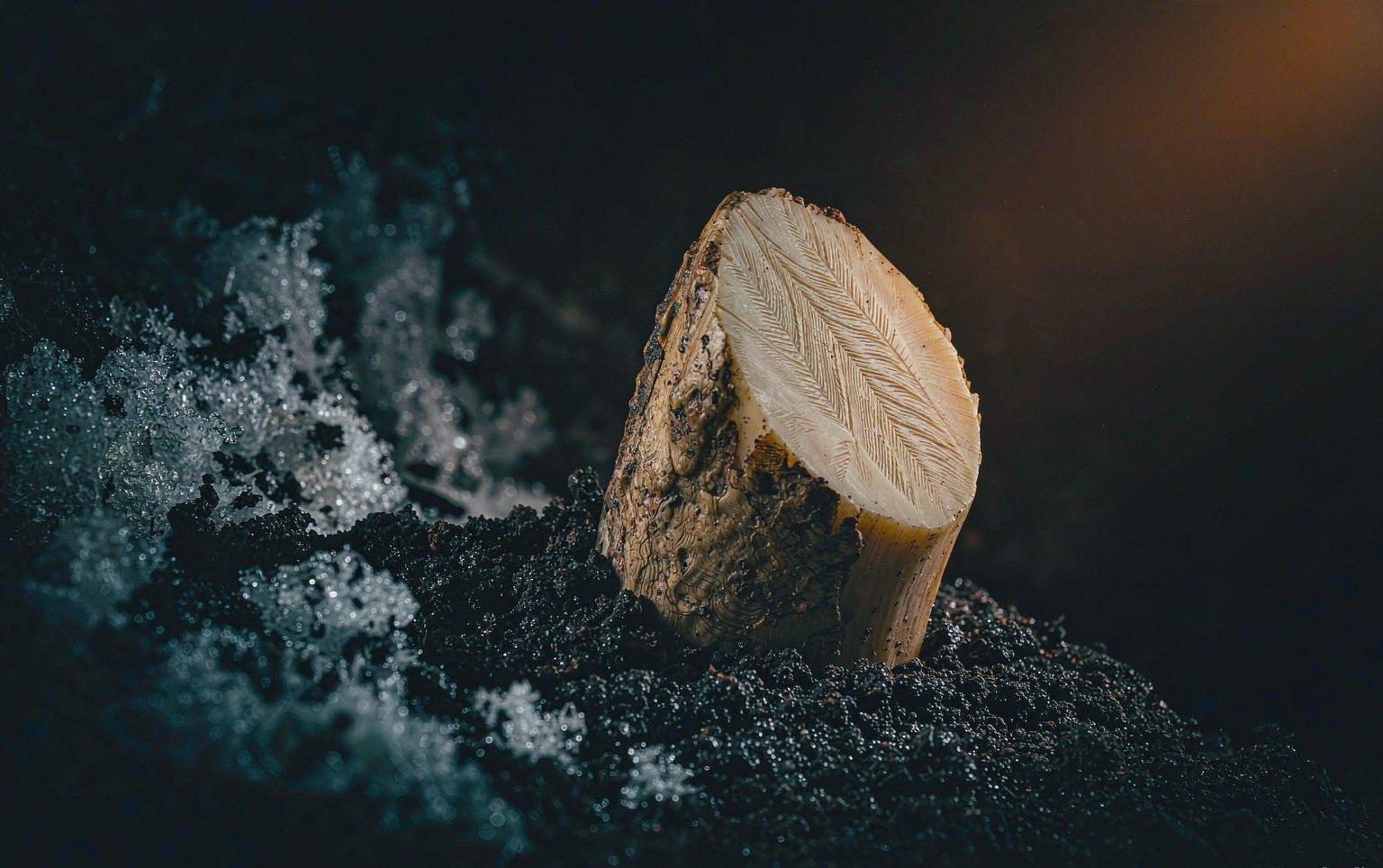
Ten Thousand Years Under the Ice
Our mammoth tusk is recovered from the permafrost of Siberia — most of it in Yakutia, where the frozen ground has held it for ten thousand years or more. Each tusk emerges only as the ice retreats, one piece at a time, and no two are alike.
Mammoth ivory is the tusk of an extinct species. It is not elephant ivory, it involves no living animal, and it is legal to own and trade. When you choose mammoth tusk, you choose a material that predates every civilization that ever carved it.
Our standard: whole-tusk carving, no splicing, no bleaching, no artificial ageing.
- Schreger lines — the grain that cannot be fakedGenuine mammoth ivory shows fine cross-hatched grain where two sets of lines meet at roughly 45 degrees. Machine-made imitations in resin or bone powder cannot reproduce this intersection.
- The UV testAncient ivory fluoresces only faintly under ultraviolet light, while modern substitutes glow bright blue-white. A simple UV torch reveals the difference in seconds.
- Weight and warmthReal tusk feels substantial and quickly warms to the touch. Resin copies feel light, plasticky, and stay cold.
No two tusks carry the same grain — the ice decided it ten thousand years ago.
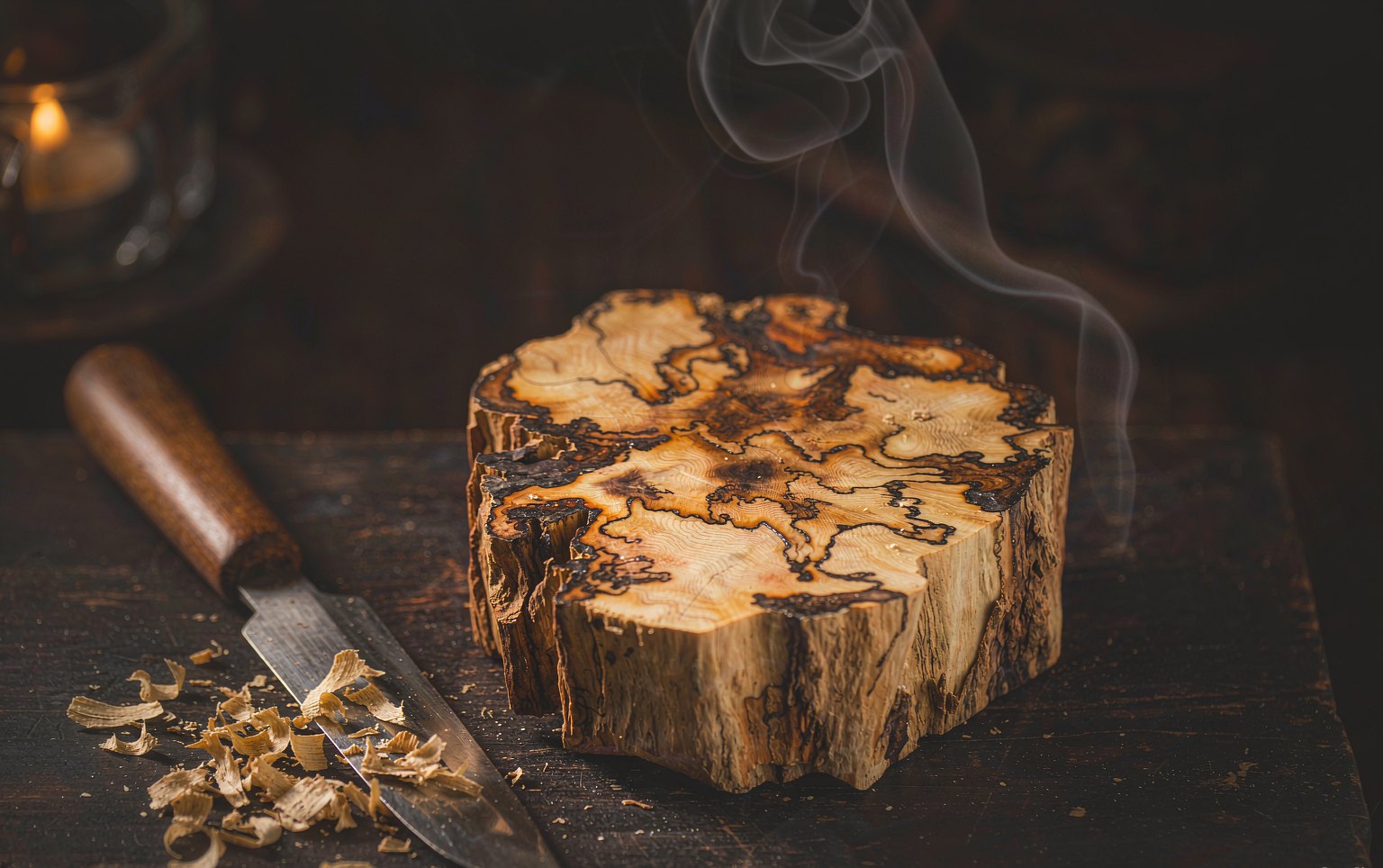
The Wood That Heals Itself
Agarwood is not simply wood. It is a wound: when an aquilaria tree is injured and infected, it defends itself over decades, slowly saturating the damaged heartwood with dark resin. Without the wound there is no agarwood — and no shortcut can compress those decades.
We work with wild, aged material from two traditions: the sweet, refined Hui-An lineage and the deep, resinous Xing-Zhou lineage. Both are chosen for natural oil content, never boosted.
Our standard: wild aged wood, no perfume soaking, no pressed or oil-injected material.
- Read the oil linesGenuine agarwood carries black resin veins that run naturally through the wood grain. Painted or printed lines sit on the surface and follow the brush, not the tree.
- Warm it and smell itReal resin releases its own complex aroma when gently warmed. Perfume-soaked ordinary wood smells of a single flat scent that fades fast.
- Feel the weightHigh resin content makes agarwood notably dense. A piece that feels as light as ordinary wood carries little of the oil you are paying for.
The tree heals itself for decades. We only carve what it has already finished.
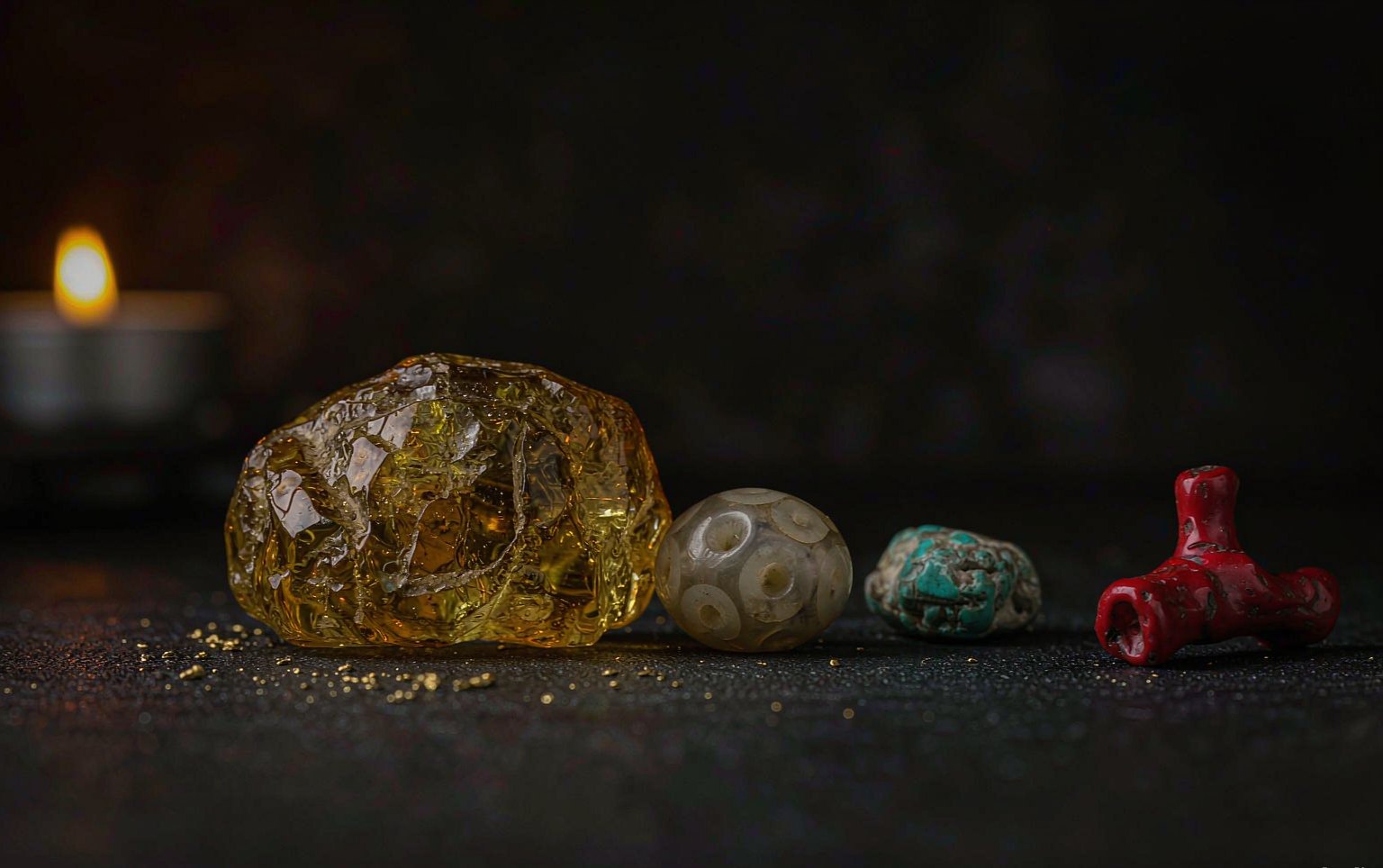
Stones Chosen One by One
Baltic amber is fossilised resin from forests that grew forty million years ago — warm to the touch, capable of enclosing an insect older than any dynasty. Alongside it we set Tibetan dzi beads, old Mediterranean coral, and turquoise chosen for depth of colour rather than uniformity.
Each stone is selected individually, by hand, for the piece it will join. We would rather leave a strand unfinished than match it with stones chosen by the box.
- The salt-water floatTrue amber floats in saturated salt water; most imitations sink. Together with the faint scent of pine resin when warmed, this is the oldest test in the trade.
- The static testVigorously rubbed amber picks up a static charge strong enough to lift a small piece of paper. Glass and plastic copies behave differently.
- Dzi that bites inGenuine antique dzi show etched patterns that have penetrated the bead body over centuries. Painted lines flake; etched lines do not.
Chosen one by one, never matched by the box.
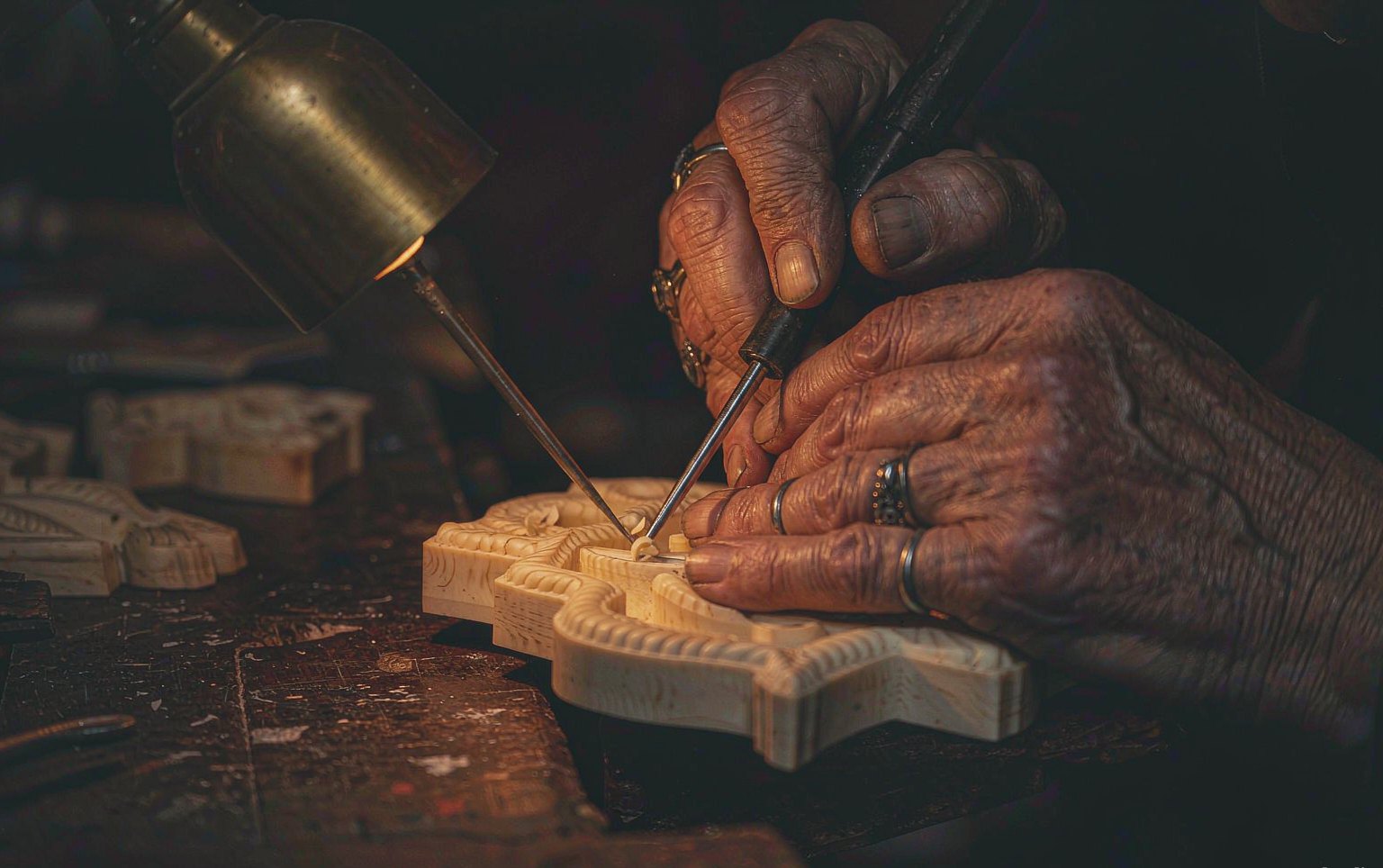
No Two Are Alike. This Is the Proof.
A machine can carve the same design a thousand times. A hand cannot — and that is precisely the point. Every piece that leaves this atelier carries the record of a single pair of hands responding to a single piece of material.
When you compare your piece with the photographs on this site, expect the grain to wander, the colour to shift in depth, the curve of the bead to sit a little differently. These are not flaws to apologise for. They are the signature of the human hand, and the reason your piece exists only once.
- Grain directionThe flow of ivory and wood grain is followed, never forced — so each piece resolves differently.
- Depth of colourResin, amber and stone vary in saturation; we place each tone where it belongs.
- The hand-feelCurves are finished by fingertip pressure, so no two pieces grip the wrist identically.
A machine repeats. A hand responds. What you receive is the record of that response.
Questions We Are Always Asked
Will my piece look exactly like the photos?
No — and it should not. Every piece is hand-carved from an individual piece of material, so grain, colour depth and proportions vary slightly. If exact uniformity matters to you, machine-made goods will serve you better.
How do I know it is genuine?
Every piece ships with a material certificate naming its material and origin. The three authenticity tests for each material are documented above so you can verify for yourself.
Will agarwood keep its scent?
For decades, if cared for. Keep it away from prolonged direct sun and strong chemicals, and let the resin breathe. The scent deepens with handling rather than fading.
Is mammoth ivory legal to own?
Yes. Mammoth is an extinct species and is not covered by the bans on modern elephant ivory. It is legal to own and trade in the UK, EU and US.
How should I care for carved ivory and amber?
Wipe with a soft dry cloth, avoid water and perfume, and store away from heaters and direct sun. A thin layer of skin oil from regular wear is the best polish there is.
Can I commission something specific?
Often, yes — within what the material allows. Write to us with your idea and we will tell you honestly whether it is possible, and what it would take.
What Every Piece Carries
Documented origin
Siberian permafrost tusk and wild aged agarwood, traced to the supplier and region of origin.
Material certificate
A signed certificate naming the material, its origin, and the carving date — enclosed with every piece.
Hand-carved, one at a time
No machine production lines, no bulk matching, no two identical pieces. Ever.
Begin Where Your Material Lives
Every material on this page is available as finished work — or as the starting point for something made only for you.
Serenity Knots Atelier sources mammoth tusk from extinct species recovered in Siberian permafrost. No modern elephant ivory is used in any product. Cultural symbols are treated with attribution and respect.